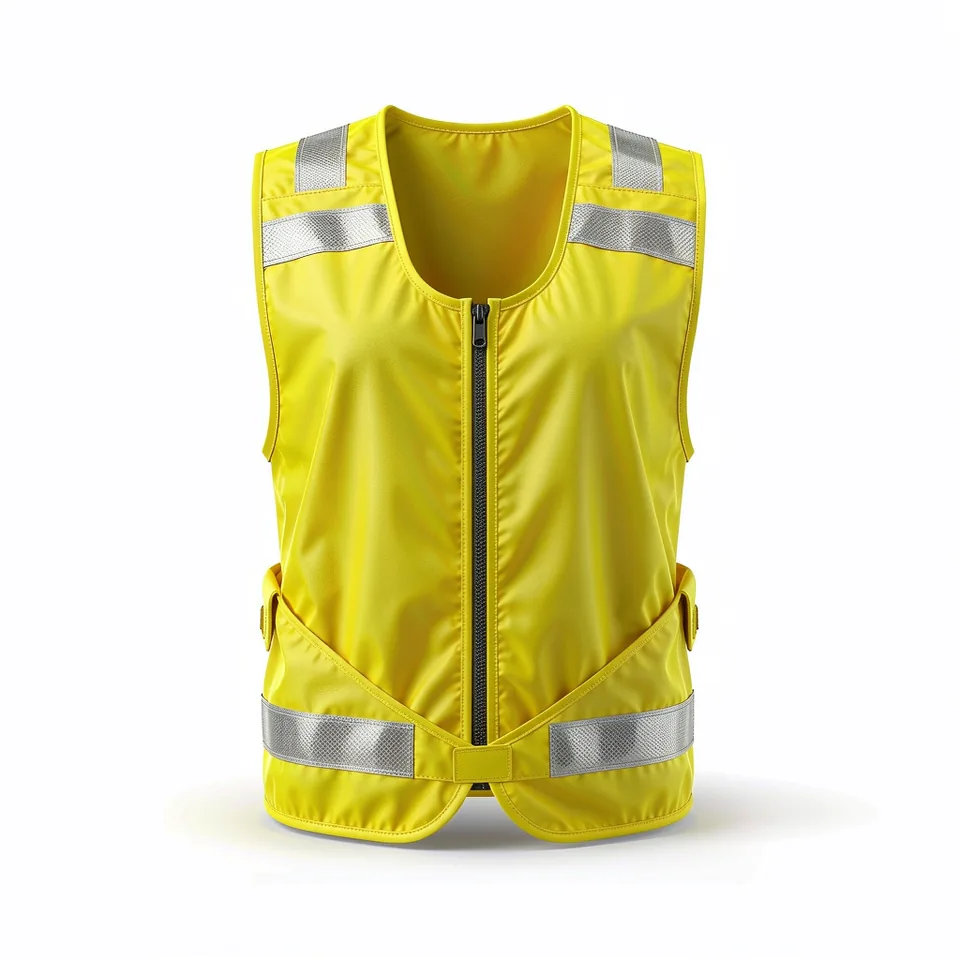
What makes a worker visible at night is the retro-reflective tape, and tape only works where it is exposed to the light and to the eye. Layering is where visibility disappears without anyone noticing, because each individual garment is correct on its own. A hi-vis vest over a jacket is the usual culprit, and it is worth separating the two problems it creates.
Visible area, not colour
A fluorescent vest worn over a dark jacket leaves dark sleeves, dark shoulders and a dark back below the vest. At night a driver sees a bright rectangle with dark edges, and the human shape — the thing the eye recognises as a person — is gone. That is why hi-vis clothing for night road works carries tape around the sleeves and across the body: the tape has to describe a person, not a panel. Reflective tape placement matters more than the quantity of tape — two bands at waist and chest read as a person, one wide band across the back does not.
Where the vest rides up
Vests move. Under a harness, over a bulky coat, or with a tool belt, the vest climbs and the lower band ends up at chest height instead of the waist. This is a fit problem, not a user problem, and it is solved with a longer vest, side adjusters, or a jacket with built-in bands instead of a vest over everything.
Daylight and night are different problems
In daylight the fluorescent background does most of the work: it contrasts with the surroundings and it is seen against foliage, concrete, machinery. At night the background does almost nothing and the tape does all of it, and only while a light is aimed at it. A garment with a large fluorescent area and no retro-reflective tape is a daytime product being issued for a night task.
Wet, dirty, old
Wet fabric darkens, and a dark hi-vis garment is not hi-vis. Mud on the lower band, oil on the sleeve, diesel film on the tape — all reduce the light that comes back. Washing helps until the tape itself dulls: retro-reflective tape has a service life, and industrially laundered garments reach the end of it faster than most buyers expect.
Washing decides lifespan
Washing hi-vis reflective tape is where most garments quietly lose their performance: domestic detergent, fabric softener and high-temperature drying are all unkind to it. Where garments are laundered in-house, the tape has to be specified for that regime, and the wash process belongs in the purchase decision rather than in a conversation after the first batch comes back grey.
What to specify
The task and the light conditions, the number of bands and where they sit, whether the garment is worn over a harness or a coat, and the wash regime. Where the answer to the first question is “night, on a road”, the answer to the second is usually more tape than a standard vest carries.
References: IS-V500 for a banded vest, IS-T110 for a banded jacket worn as the outer layer, IS-T220 for a rain set.
Written by our product desk
These notes describe what matters in the product and what we will put in writing. If your situation does not match the general case, send it to us — a specific question gets a specific answer, in writing.
More notes
All notesPrevious note: PVC rainwear: the seams, and where it fails first
Next note: Steel toe or composite toe, and the sole underneath it