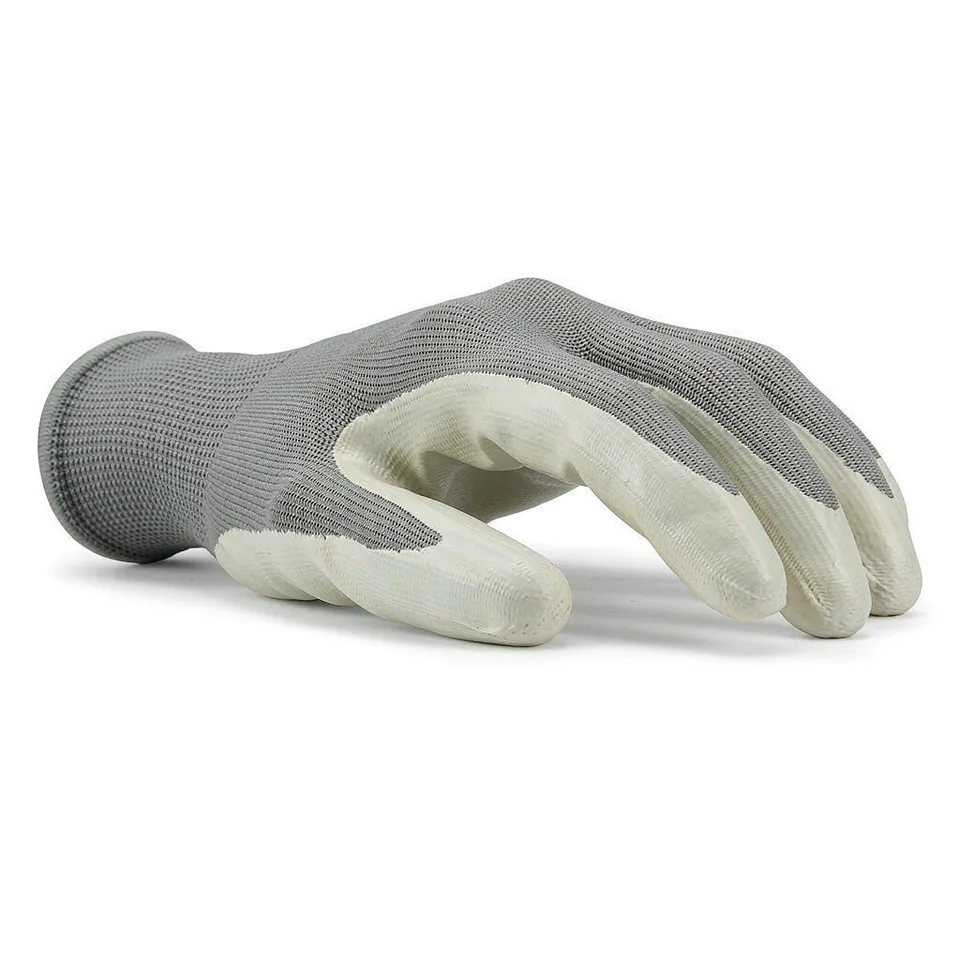
The gauge printed on a glove specification is a knitting count: needles per inch on the machine that made the liner. It is a description of the fabric, not a grade. A higher number is not a better glove, and a lower number is not a cheaper one by definition. Asked as “13 gauge vs 15 gauge gloves — which is better?”, the question has no answer until the task is known.
What the number measures
Gauge is often presented as a quality grade, but the coated glove gauge meaning is narrower than that: it describes the liner, not the glove. Thirteen gauge means thirteen needles per inch. Fewer, thicker needles take a heavier yarn and produce a visibly knitted fabric with real thickness. An 18 gauge glove liner is knitted on finer needles, with thinner yarn, into a denser, smoother surface that reads as fabric rather than knitwork. Fifteen sits between them and is where most of the industrial range now lives.
What it changes in the hand
Finer gauge buys dexterity and loses mass. There is less material between the fingers, so small parts can be picked and turned; there is also less yarn to wear through, so the glove dies sooner on abrasive work. Coarser gauge is the reverse: more cushioning, more material to sacrifice, clumsier on anything small.
Price follows the knitting, not the protection. Fine-gauge machines are slower per pair, so an 18 gauge liner costs more to make than a 13 gauge one — which is why a fine-gauge glove is usually sold for precision work rather than general handling.
Where buyers get caught
“18 gauge” with a heavy dip. The dip, not the knit, sets how the glove feels. An 18 gauge liner under a thick sandy nitrile coating is a general-handling glove with a fine-gauge label on it.
Gauge quoted without weight. The glove grams per pair figure is the number that predicts wear life. Two 15 gauge gloves can differ by 40% in weight; the heavier one lasts noticeably longer, and the spec sheet usually mentions it only if you ask.
Upgrading gauge to fix a comfort complaint. Moving a team from 13 to 18 gauge for comfort often doubles consumption, because the glove now fails at the fingertips in half the time. Comfort and cost have to be solved together.
Gauge confused with cut resistance. It has nothing to do with it. Cut performance comes from the yarn blend, not the knit density.
Choosing by task
Mixed carton picking and packing: 13 to 15 gauge with a foam palm, medium weight. Light assembly and parts under a hundred grams: 15 to 18 gauge with PU. Abrasive or oily parts, sheet edges: 13 gauge with a heavier dip. Cold room work: coarser knit and a thicker coating, because a thin glove stiffens and the wearer compensates by gripping harder.
The four numbers to ask for
Gauge, coated weight per pair, liner yarn, and coating type. A supplier who quotes only gauge is giving you a marketing number rather than a specification, and the difference will show up in your consumption report six months later.
Written by our product desk
These notes describe what matters in the product and what we will put in writing. If your situation does not match the general case, send it to us — a specific question gets a specific answer, in writing.