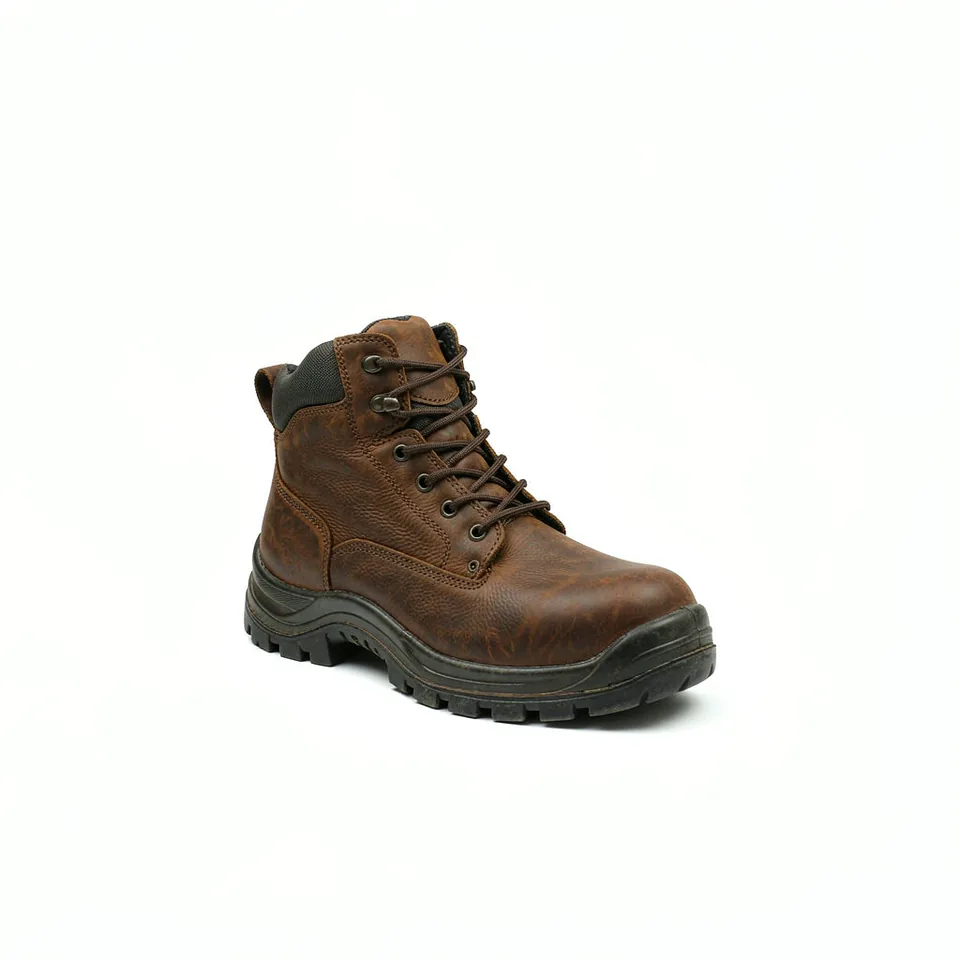
Safety footwear is sold on the toe cap and judged on the sole. The steel toe vs composite toe question gets the attention, and the safety shoe sole material decides whether the pair is still worn at the end of the shift. Both are specification decisions, both are invisible from the outside, and getting either one wrong shows up as a comfort complaint three weeks into the order rather than as a defect.
Steel
Steel is thin and strong, so the toe box stays low and the shoe fits like a shoe. It is the cheapest way to reach a given level of toe protection, and the most predictable. Two limits: it conducts cold, which is noticeable in a cold store or on a winter site, and it is metal, which rules it out where footwear passes through a metal detector or where electrical isolation applies.
Composite
Composite caps — fibreglass, carbon, or a blend — are non-metallic. They are warmer in cold conditions, invisible to metal detectors, and acceptable where metal-free footwear is required. The trade is thickness: a composite cap needs more material for the same strength, so the toe box is taller and the fit changes. Buyers who switch material without trying a pair often get a wave of size complaints that looks like a sizing fault and is really a cap-depth problem.
Aluminium
Between the two: thinner than composite, lighter than steel, still metallic, and a colder surface in winter. Where it is used, it is usually a weight and fit decision rather than a protection decision.
The sole is a separate decision
PU. Light, cushioning, good on dry concrete and in warehouses. Hydrolyses in prolonged damp storage — a pair left in a humid container for a year can crumble at the midsole before it is ever worn.
Rubber. Better on hot surfaces, oils and rough ground, heavier, and usually the choice where the floor is uneven or hot.
PVC. Cheap, waterproof, stiff. The Wellington boot answer, and the right one for wet processing floors. Where the floor is wet all shift — a food plant, a wash-down bay — a slip resistant work shoe with a patterned rubber outsole is the starting point rather than an upgrade.
Dual-density PU. A softer midsole for cushioning with a denser outsole for wear — the usual compromise in a shoe worn all day on hard floors.
Anti-penetration
An anti penetration midsole is a plate under the foot — steel, or a textile composite that does the same job without metal and without the cold bridge. Where the site runs metal detection, the plate matters as much as the cap, and the two materials should be chosen together rather than separately.
Fit questions that decide the order
Toe box height for the wearer's foot and socks, width options, whether the shoe is worn with orthotics, and whether the same model is issued to men and women or one unisex last is used. Most “uncomfortable safety shoe” complaints are a last-shape problem, and no amount of cushioning fixes a last that is the wrong shape.
What to send
Floor type and contamination (water, oil, swarf), temperature, whether metal detection applies, the wearer's usual shoe size and width, and whether the pair is worn indoors all day or in and out of vehicles.
References: IS-B330 (composite-toe mid-cut boot), IS-B410 (low-cut slip-resistant shoe), IS-B520 (PVC Wellington, steel toe).
Written by our product desk
These notes describe what matters in the product and what we will put in writing. If your situation does not match the general case, send it to us — a specific question gets a specific answer, in writing.
More notes
All notesPrevious note: Hi-vis layering: what happens when a vest goes over a jacket
Next note: none - this is the oldest note