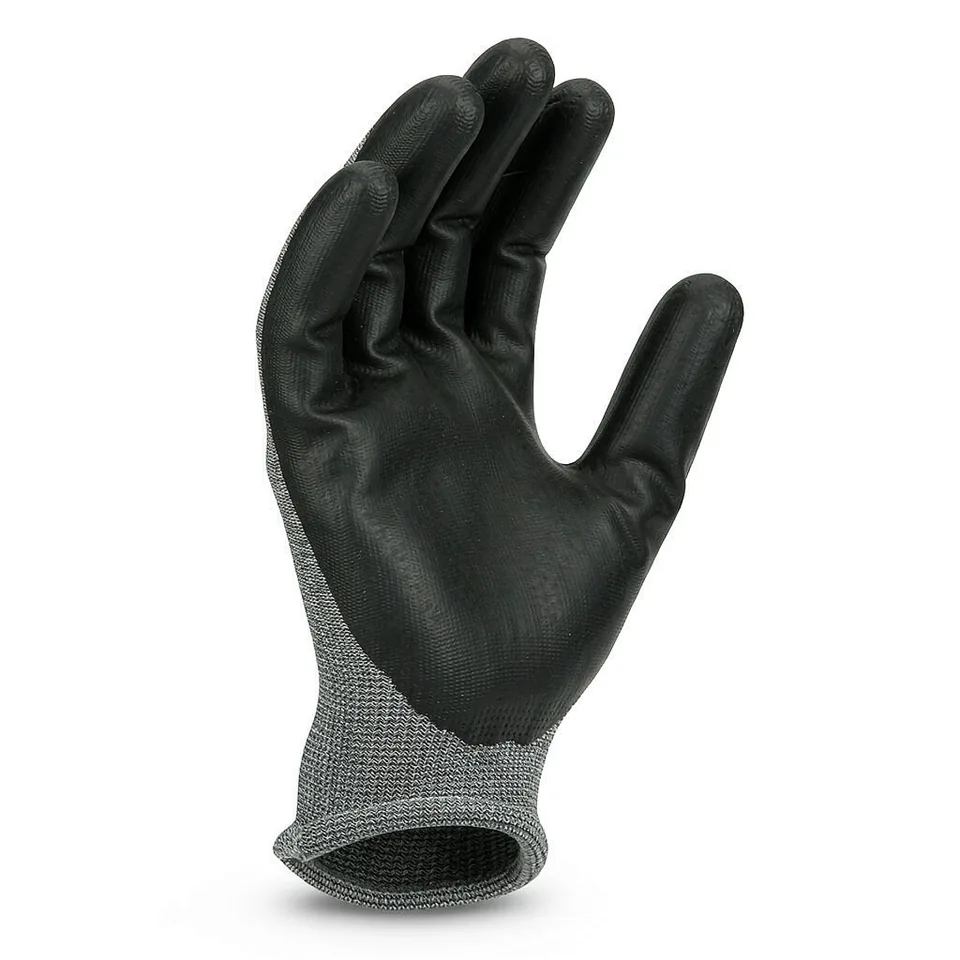
Cut resistance in a glove comes from the yarn. The palm dip is there for grip and abrasion; the protection is decided by what the liner is made of and how much of it is in the blend. This is why two gloves with the same coating and the same look can be a different class of product in the hand. HPPE cut resistant gloves, glass fibre blends and steel-cored liners reach that protection by three different routes, and they are not interchangeable.
What the liner is resisting
A sharp edge does not cut a glove the way a blade cuts rope. It loads a very small area, and the yarn either resists being severed, spreads that load across many fine filaments, or physically stops the edge. Good liners combine two of those three mechanisms, which is why the cut resistant glove materials on a spec sheet are almost always described as a blend rather than a single fibre.
HPPE
High-performance polyethylene is light, strong, comfortable against the skin and does not absorb much water. It is the base of most modern cut-resistant liners. Its limits are heat and heat-related work: it softens and loses performance at temperatures well below what aramid tolerates, so it is a poor choice near sparks, hot slag or flame. It is also a poor choice where the hazard is heat rather than a sharp edge.
Glass fibre
Glass fibre is inexpensive and adds cut resistance per unit weight, which is why it appears in a glass fibre glove liner blend. Two honest problems: the fibre can irritate skin over a long shift, particularly when the knit is loose or the glove is worn through, and performance drops with repeated washing. A glove that scratches is a compliance problem even when it protects, because the wearer takes it off.
Steel core
A steel core cut glove uses a fine steel filament, which gives the highest cut resistance for the thinnest liner; because it is metal it can be picked up by an inline metal detector, which matters in food and pharmaceutical packing. The costs are weight, stiffness, and corrosion: a steel-cored glove that stays damp rusts at the core and stains the product it touches.
What the coating cannot fix
Cut tests load a flat sample. In the hand, cuts usually arrive at the fingertip or between thumb and index, where there is no coating and often the least material. A glove that performs well as a sample but fits loosely at the fingers will still be cut, which is why fit and length matter as much as the yarn spec.
Matching to the task
Glass and glazing. A fine, high-cut liner with a grippy dip, because wet glass is slippery and a slipping hand finds the edge.
Sheet metal and press work. Cut liner with a heavier nitrile or PU dip. The dip is not there for cut resistance; it protects the liner from abrasion so the liner keeps its cut performance for the whole shift.
Food cutting and boning. Metal-detectable if the line has a detector, and a liner that survives the wash cycle rather than degrading in it.
Automotive stamping. High cut resistance with a foam palm, because the blanks arrive oily and a slippery grip on a sharp blank is the actual accident.
Cut resistance is not cut-proofness
No glove stops a blade under load; a glove buys time and reduces the depth of a cut. Where the task involves a moving blade, the guard is the control and the glove is the second layer. Sellers who present cut resistance as a guarantee are selling a story, and the buyer pays for it at the first accident review.
The reference we hold for this work is IS-G505, an HPPE-blend liner with a nitrile palm for dry and lightly oiled parts.
Written by our product desk
These notes describe what matters in the product and what we will put in writing. If your situation does not match the general case, send it to us — a specific question gets a specific answer, in writing.