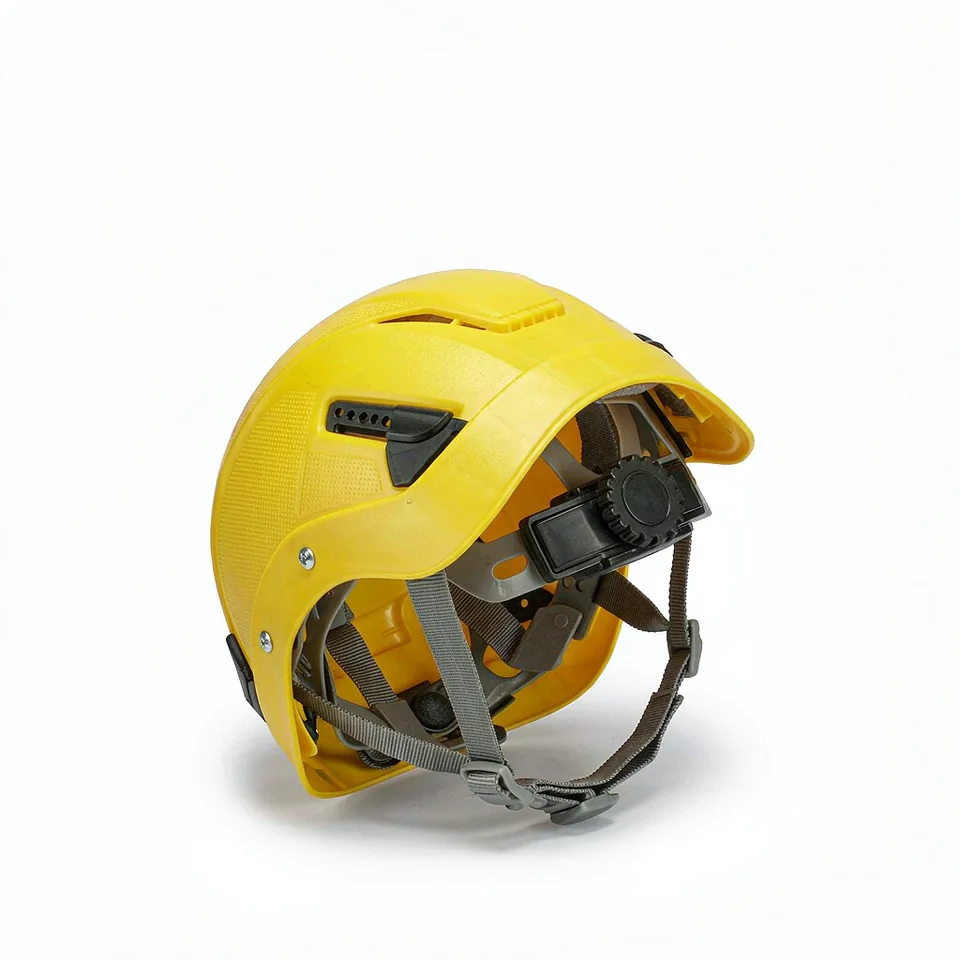
A safety helmet specification is the easiest thing in a PPE catalogue to photograph and one of the harder ones to write down. Two helmets that look the same in a picture can differ in three places that decide whether workers keep them on.
HDPE vs ABS helmet shell
HDPE is the common industrial shell: light, tough, and adequate for general site use. ABS is stiffer and takes a cleaner finish, which is why it appears in branded and electrical ranges. The material changes weight, finish and price — and it changes what the shell can be vented to.
The suspension
Four-point or six-point, and the difference is felt at the end of a shift rather than seen in a photo. A six-point suspension helmet spreads load across a wider area of the head. The adjustment matters as much: a ratchet holds a setting and can be adjusted with one hand, a pin-lock is cheaper and slower. For crews sharing helmets between shifts, that difference produces complaints fast.
Sweatband and padding
A removable, washable sweatband is a small line item that decides whether a helmet is usable for more than one season. Ask whether it is replaceable and whether replacements can be ordered separately — a helmet sweatband replacement is a two-minute job with the right part and impossible without it.
Vented or closed
Vented shells are cooler and unsuitable where there is electrical risk or where the work is under a hot liquid hazard. Closed shells are hotter and safer in those settings. This is a hazard decision, not a preference.
Accessories
Chin straps, face-shield slots, ear-muff attachments, badge holders. Each one is a moulding or a bracket, and each one is easier to include at the order stage than to retrofit.
Where the cost sits
Usually in the suspension and the finish, not the shell. A cheaper helmet is often the same shell with a simpler harness — which is a legitimate choice for short-duration visitors and a poor one for a full shift.
Written by our product desk
These notes describe what matters in the product and what we will put in writing. If your situation does not match the general case, send it to us — a specific question gets a specific answer, in writing.
More notes
All notesPrevious note: Size runs: why the split matters more than the total
Next note: Nitrile foam or PU: choosing a glove coating by task