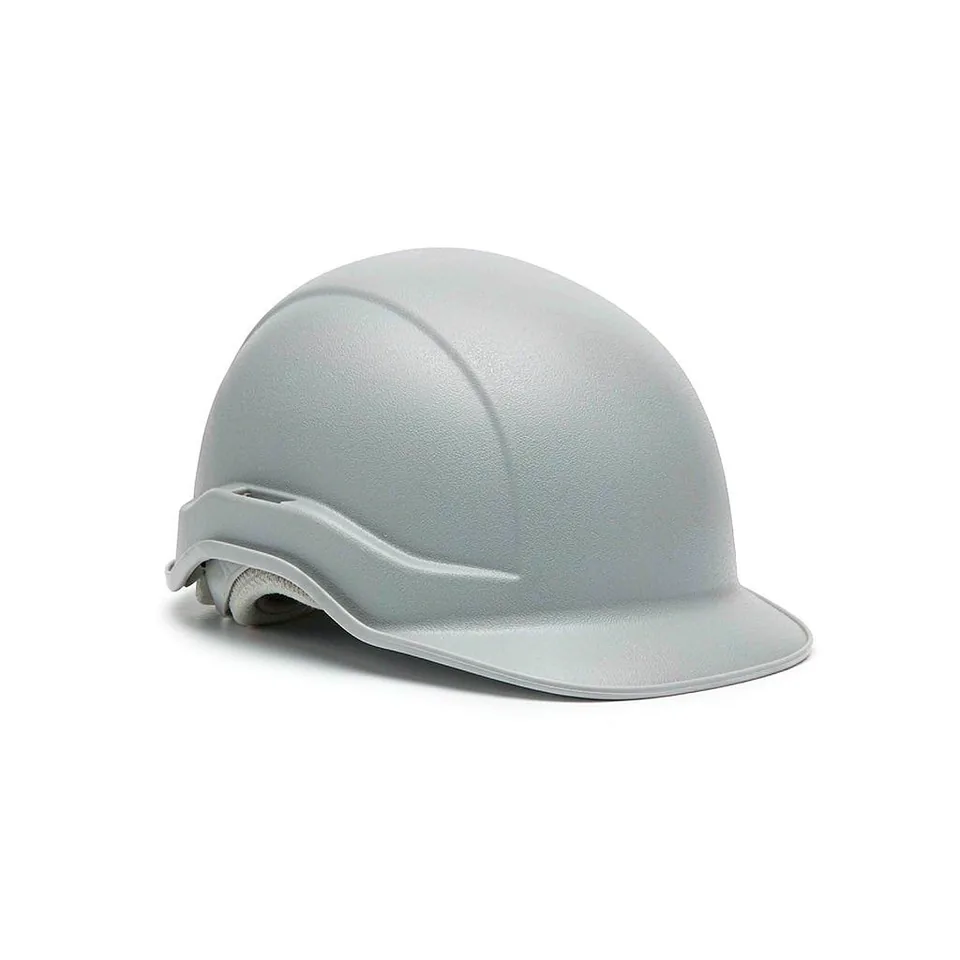
The bump cap vs hard hat question comes up on every site that carries both, and the two products answer different hazards even though they sit in the same column of a catalogue. Choosing the wrong one is a common and quiet failure, because the worker is wearing something, the photograph looks right, and nobody checks what it was designed for.
What a bump cap is for
A bump cap protects the head from the wearer's own movement: standing up under a low beam, a shelf edge, a vehicle ramp, a machine guard, pipework in a plant room, the underside of a lift. The impact is low energy and it comes from the wearer. There is no suspension in the helmet sense — a moulded shell sits inside a fabric cap, close to the skull.
What it does not do
It is not designed for a falling object. With no clearance between shell and head, an impact from above transfers almost directly, and the shell's job is to spread a bump, not to absorb a drop. It is also not a substitute where a chin strap is required, and in a fall or a tight space it comes off.
Where the confusion costs money
Bump caps on a construction site to cut cost per head. It photographs as compliance and it is not protection against the actual hazard, which is material falling from above.
Helmets in maintenance jobs under low ceilings. Bump cap warehouse maintenance is the classic case — under racking, inside a plant room, beneath a vehicle ramp — where the helmet does not fit the space, so it is taken off and the worker ends up with nothing. A bump cap would have been worn all shift.
Two products, no rule. A workforce with both, and a subcontractor who arrives with the wrong one because nobody wrote down which area gets which.
Fit and the details that decide acceptance
Bump caps are sized like caps, so head size matters more than with an adjustable helmet. The brim is a real choice: a micro brim bump cap keeps upward vision clear and suits confined work; a fuller brim shades the eyes outdoors. Ventilation matters because a fabric-shell cap is worn for a whole shift. And the cap has to be washable, because it is a textile worn against the head.
The rule that works
When to wear a bump cap is an area question, not a job-title question. Falling objects, overhead work, cranes and hoists, scaffolds: helmet, with a suspension and a chin strap where the task needs one. Nothing overhead except structure, racking and machinery: bump cap. Where a site has both, the answer is not a compromise product. It is two products and a written rule about which area gets which.
The bump cap we hold is IS-H205, a micro-brim shell in a ventilated fabric cap.
Written by our product desk
These notes describe what matters in the product and what we will put in writing. If your situation does not match the general case, send it to us — a specific question gets a specific answer, in writing.