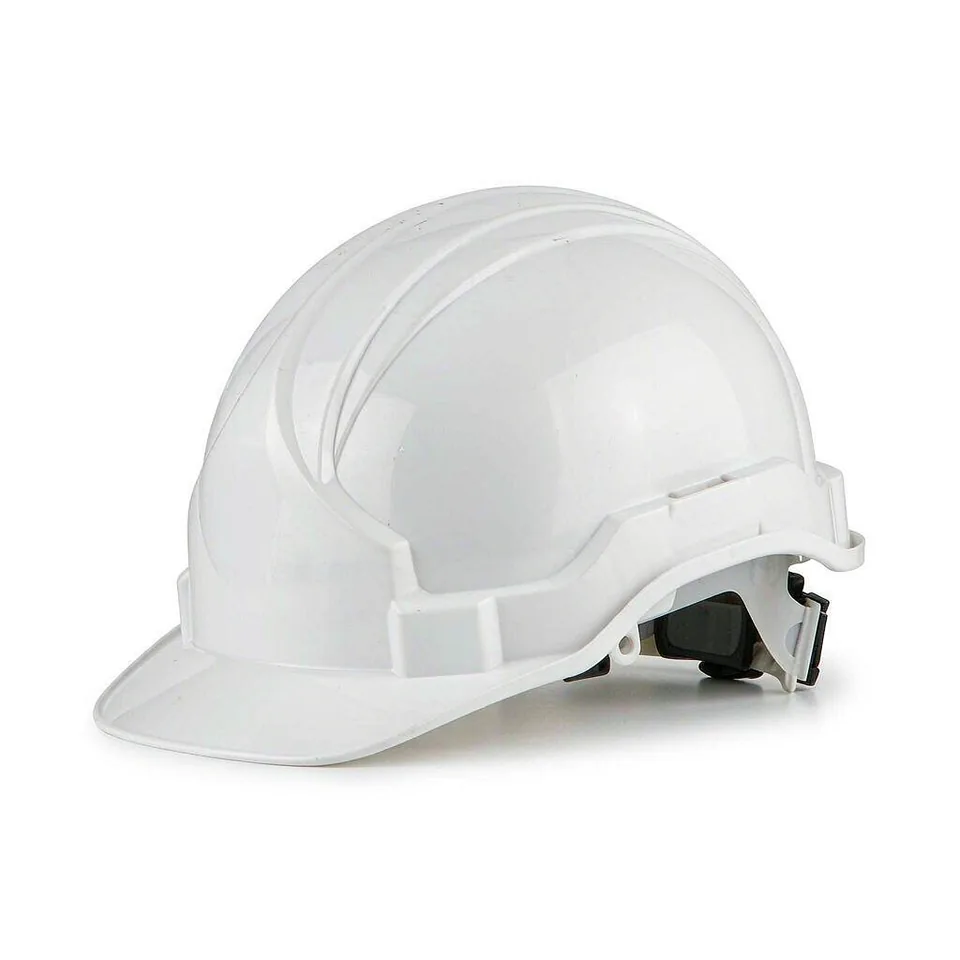
Most industrial helmet shells are made in two versions: one with vent slots, one closed. The difference is not cosmetic and it is not a preference. It decides whether the helmet is permitted on a given task, and whether it stays on a head at 35°C with humidity to match. Choosing a vented vs unvented safety helmet is a hazard decision before it is a comfort decision.
What vents do
Vent slots let hot air leave the shell, which is the whole reason a safety helmet for hot climate work is ventilated at all. On a hot, humid site that is the difference between a helmet that is worn and one that ends up hanging on a fence by ten in the morning. Ventilation lowers the temperature inside the shell, which keeps the sweatband drier and the “too hot” complaint from becoming a removal.
The effect is real but modest. A vented shell is not air conditioning; it works with the suspension to let heat escape upward. A sealed shell with a good suspension and a replaceable sweatband is more comfortable than a vented shell with a bad one.
Where vents are not allowed
Live electrical work. Vented hard hat electrical work is not a combination to quote: an opening in the shell is a path for current and for the arc that follows it.
Molten metal, welding spatter, hot slag. Openings admit material, and once it is inside the shell it stays against the head.
Chemical splash from above. A sealed helmet chemical splash version is the only one to issue: the same geometry that lets air out lets liquid in, and it pools in the crown.
In those settings the closed shell is the only version to issue, and heat has to be managed another way: rotation, shade, hydration, cooling neckwear, or a shorter wear period per task.
Rain
Vented shells admit water in sustained rain. This is rarely a safety failure and always a comfort failure, and comfort failures are what generate the request to switch products halfway through a project. Where the site works outdoors through a rainy season, a closed shell or a helmet with a rain brim is the practical choice.
What vents do to the shell
A moulded slot removes material, so a vented shell is not the same structure as a sealed one. Good shells compensate with ribbing, wall thickness and slot placement; cheap ones simply cut holes. This is one of the places where two helmets that look identical in a photograph are not the same product, and the difference never shows on a spec sheet.
Accessories
Vented and sealed versions usually take the same suspension, and often the same side slots for ear muffs or a face-shield carrier — but not always. If a buyer is adding earmuffs or a shield bracket, the combination should be confirmed rather than assumed. A bracket that fits one shell and not the other is a common and avoidable delay.
The decision in one line
Electrical work, molten metal or chemical overhead: closed. Outdoor heat and humidity, general construction, warehouse and landscaping: vented. Either way, spend the money on the suspension and the sweatband, because that is where comfort actually lives.
Both versions are in our range as IS-H100 (vented, six-point suspension) and IS-H120 (closed shell).
Written by our product desk
These notes describe what matters in the product and what we will put in writing. If your situation does not match the general case, send it to us — a specific question gets a specific answer, in writing.
More notes
All notesPrevious note: Cut-resistant liners: what HPPE, glass fibre and steel do
Next note: Bump caps and helmets: where the line actually sits