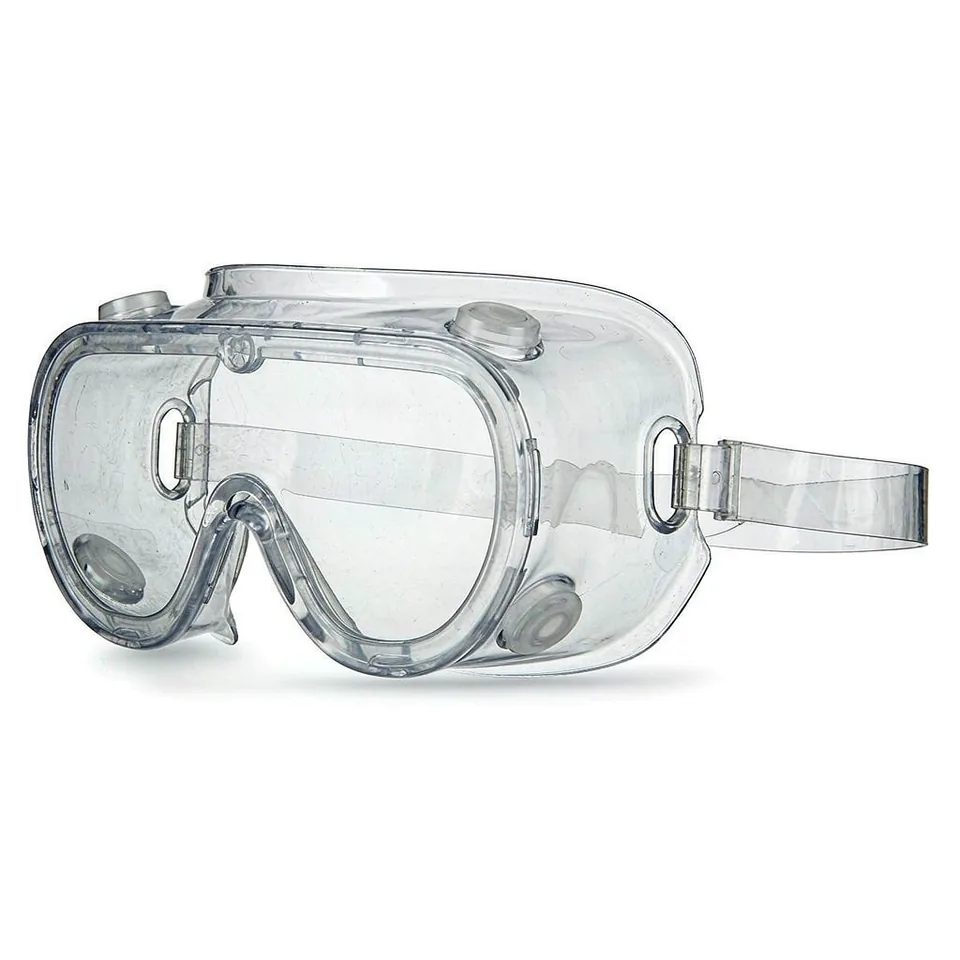
Fog is condensation: warm moist air meets a cold lens and water forms droplets. An anti-fog coating does not prevent that. It changes what the water does once it arrives, and understanding the difference explains why some products work for a year and others for a fortnight. How an anti-fog coating works, and how quickly it stops working, is what separates anti-fog safety goggles that last a season from ones thrown away inside a month.
Two mechanisms
Hydrophilic coating. The surface absorbs water and spreads it into a thin continuous film. You look through a film instead of a field of droplets, and vision stays usable. The coating has a capacity: once it is saturated it stops working until it dries, which is why a coated lens in a saturated goggle eventually fogs anyway.
Physical. Keep the lens warm or keep the air moving: double lenses, indirect vents, a gap between lens and face. Nothing to wear off, but it depends on airflow that a sealed goggle does not have.
What kills the coating
Wiping with a dry paper towel or a shirt sleeve. The abrasive action removes the film and scratches the lens at the same time. Solvent and alcohol wipes, which strip it faster than anything else. Hot soapy water used repeatedly, which is good for hygiene and hard on coatings. Grit trapped in a pocket or a toolbox, doing the same damage as sandpaper. Storage face down on a bench.
Why goggles fog more than spectacles
A sealed goggle holds the moisture from the face inside. The better the seal, the worse the fog, which is exactly why indirect vents exist. There is one case that comes up on almost every site: goggles fogging with dust mask, where exhaled air goes straight up behind the lens, and at that point the mask's nose clip and face fit can matter more than the eyewear.
Test it in the climate, not the office
Fogging depends on the temperature difference and the humidity, so a lens that stays clear in a dry warehouse can fail in a cold store, on a tropical site, or on the walk between a chilled room and a warm one. If the buyer's site has either condition, the sample should be judged there. A sample room is the one place where anti-fog always works.
A cleaning routine that keeps it alive
Cleaning anti-fog lenses is the part that decides how long the coating survives. Rinse, wash with mild soap and fingertips (no cloth), rinse, shake, air dry. Store in a pouch or a case rather than a pocket. Replace when the lens is scratched, because a scratched lens fogs unevenly and is an optical problem before it is a fogging problem.
What to specify
Coating on both faces, ventilation type, whether the product is meant to go over prescription glasses, and whether spare lenses are available. On a high-use site, a product that lasts three months is cheaper than one that lasts three weeks, even at twice the unit cost.
The goggle we hold for humid and dusty work is IS-E120, an indirect-vent goggle with a coated lens.
Written by our product desk
These notes describe what matters in the product and what we will put in writing. If your situation does not match the general case, send it to us — a specific question gets a specific answer, in writing.
More notes
All notesPrevious note: Spectacles, goggles or a face shield: which closes the gap
Next note: PVC rainwear: the seams, and where it fails first