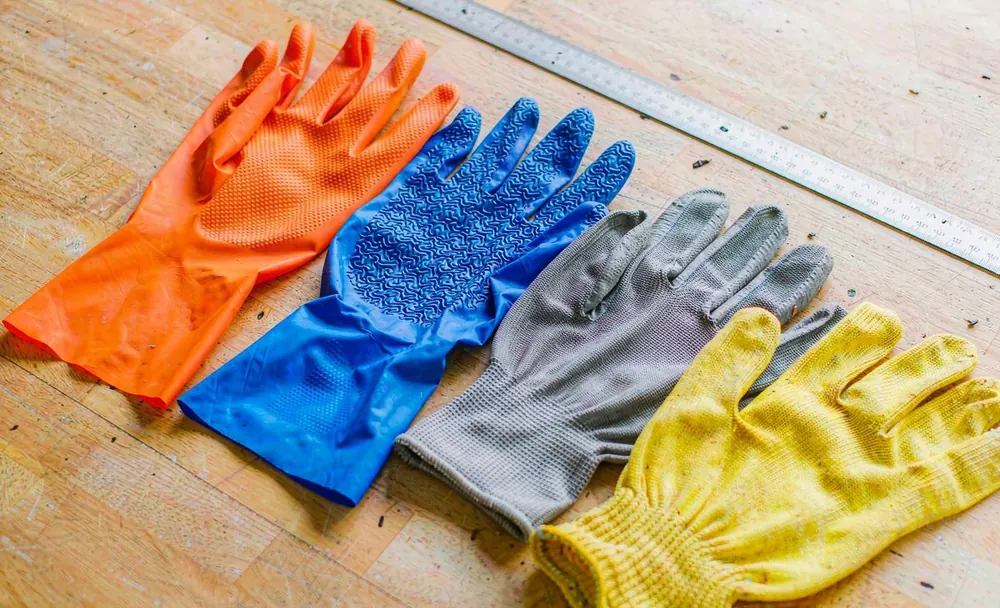
Most glove enquiries arrive as a picture and a quantity. That is enough to find the same-looking product, but not enough to know whether it will last a fortnight or a shift. Four numbers do most of the work.
Gauge
Gauge is the number of knitted stitches per inch in the liner. A 13-gauge liner is finer and more flexible; a 10-gauge liner is thicker and more abrasion-tolerant. For fine assembly, higher gauge. For rough handling, lower.
Coating and coverage
Nitrile foam holds grip on lightly oily parts. PU is thinner and gives better dexterity on dry parts. Latex crinkle grips wet and rough material but is the least comfortable against heat. Coverage matters as much as chemistry: palm-coated keeps the back of the hand breathable, fully-coated keeps liquid out.
Liner material
Cotton and polyester liners are general purpose. HPPE — high-performance polyethylene — is blended for cut resistance. If the hazard is a sharp edge, the liner is the part that matters and the coating is secondary.
Cuff
A knit wrist keeps debris out and stays comfortable. A beaded or gauntlet cuff is easier to take off and keeps liquid running away from the arm. Deciding this after the order is placed means living with the wrong one.
What we do with these four
Tell us the hazard, the material being handled and how long a glove needs to survive, and we will quote against those four parameters rather than against a photograph. If a cut level is required, say so — that is a different conversation and we will treat it as one.
Written by the sourcing desk
These notes describe how we quote and what we will put in writing. If your situation does not match the general case, send it to us — a specific question gets a specific answer, in writing.
More notes
All notesPrevious note: Why we do not print a standard number on a product page
Next note: Consolidating several protection zones into one order